
Mc — top-level configuration
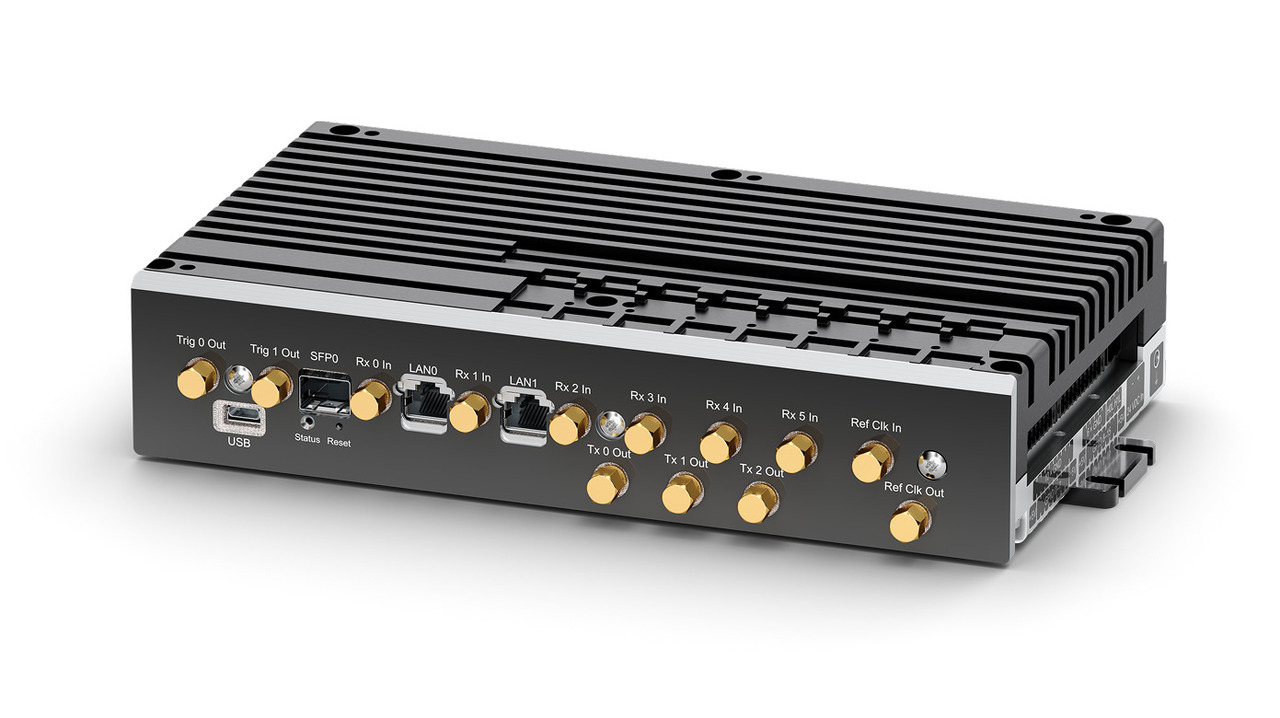
You can use this set of commands to configure general properties of IFDR10.
This version is compatible with rvp9: YES/NO The question This version is
compatible with rvp9 defines if the parameter set of saved values being stored in
the rvp10.conf file is backwards compatible with the RVP9 parameter set.
Setting this to YES also limits the RVP10 to be functionally equivalent
to the RVP900.
IP Adress of networked RVP10/IFD IQ streamThe question IP Adress of networked
RVP10/IFD IQ stream defines the Ethernet address of the source IFDR10’s IQ data
stream. For best results, attach the IFDR to a dedicated Ethernet port of the host computer
with no routers, switches, or hubs in between.
Port of networked RVP10/IFD IQ stream: 1001The question Port of networked
RVP10/IFD IQ stream sets the port, or unique identification of the RDA application
running on the IFDR10 IP address location.
IP address of networked RVP10/IFD gRPC: 10.0.2.254The question IP address of networked
RVP10/IFD gRPC defines the Ethernet address where the RVP10 server finds the
IFDR10’s gRPC control interface.
Port of networked RVP10/IFD gRPC: 5000
The question Port of networked
RVP10/IFD gRPC provides the RVP10 server the unique port identification of the
IFDR10’s controlling application.
IFD synthesized system clock: 72.0000000 MHzThe question IFD synthesized system
clock defines the frequency of the acquisition sampling clock in the IFDR module.
The clock is synthesized on-board using a low-jitter PLL that allows any frequency to be
generated merely by choosing it here to the nearest 0.1 Hz.
Limits: 181 MHz ... 240 MHz
IFD clock is derived from an external reference: YES
External input reference: 10 MHz
The question IFD clock is derived from
an external reference defines whether the synthesized system clock is derived from
an internal crystal oscillator or from an externally applied reference clock. When the
external source is used, specify its frequency here.
# Rx Mode Description
– –––––––––––––––––––––––
0 Standard single channel
1 ––Reserved––
2 ––Reserved––
3 Standard dual channel
Default receiver mode:3
The IFDR can operate in one of several fundamental modes for the acquisition of (I,Q) time series data. See RVP10 receiver modes.
 | The receiver mode changes take effect when you save the changes and restart RVP10. |
IFDR is using angles from antenna library : YESThe question IFDR is using angles from
antenna library defines the source of antenna angles used by the IFDR10 as the
shared RCP8/IRIS/RDA antenna library.
Output external reference clock enabled: YES
Output external reference clock : 10.000000000 MHz
Limits: 0.1 MHz … 1000 MHz
The question Output external reference
clock enabled defines if the IFDR10 is capable of generating a sinusoidal
oscillation to be used as a clocking reference. This parameter enables the output of this
signal and sets the signal frequency.
Polarization:
 0: Circular, left is co-pol
 1: Circular, right is co-pol
 2: Dual, H is co-pol
 3: Dual, V is co-pol
 4: Single H
 5: Single V
Polarization <Dual, H is co-pol> : 2